10 Best Puzzle Games Online to Play Free: Top Brain Games for Adults
Puzzle games are the best choice when you want to utilize a short break in your day. They are cost efficient, and can be played right in the browser. They can improve your memory, spatial reasoning, and planning.
When it comes to free games, the majority of the audience is looking for a challenge, multiple game choices, and a quick way to access the games. The best puzzle games show respect to the audience by giving them a game they can play for a few minutes, or one with multiple choices so they can play for a long time.
This article looks to provide the ten best online puzzle games (4 of which come from PoXnT Games) and the other 6 games from some of the biggest gaming websites. The list consists of a variety of tile matching games, combination games, spatial games, word games, number games, and jigsaw games.
The list is perfect for someone's daily challenge, or for someone who wants a deep and thoughtful challenge.
What Makes a Great Online Puzzle Game?
Good puzzle games are simple to understand (vocabulary wise), and difficult to master. The games that merely rely on difficult controls do not deserve the praise of having good puzzle mechanics. The best puzzle games take their time to explain the game, and then introduce further challenges through the design of their levels.
Accessibility also matters. Browser-based puzzle games are convenient because you can play them on a desktop, laptop, tablet, or phone without installing a large application. Some games focus on speed, while others reward patience. Some build vocabulary, while others depend on logic or visual awareness.
The difficulty level of a game is not what makes it a good puzzle game. Good puzzle games fairly challenge you, give you ample opportunity to improve, and provide good feedback. A good puzzle should encourage thinking, not irritation.
1. Scramble Race — Fast Word Unscrambling
Play here: Scramble Race on PoXnT
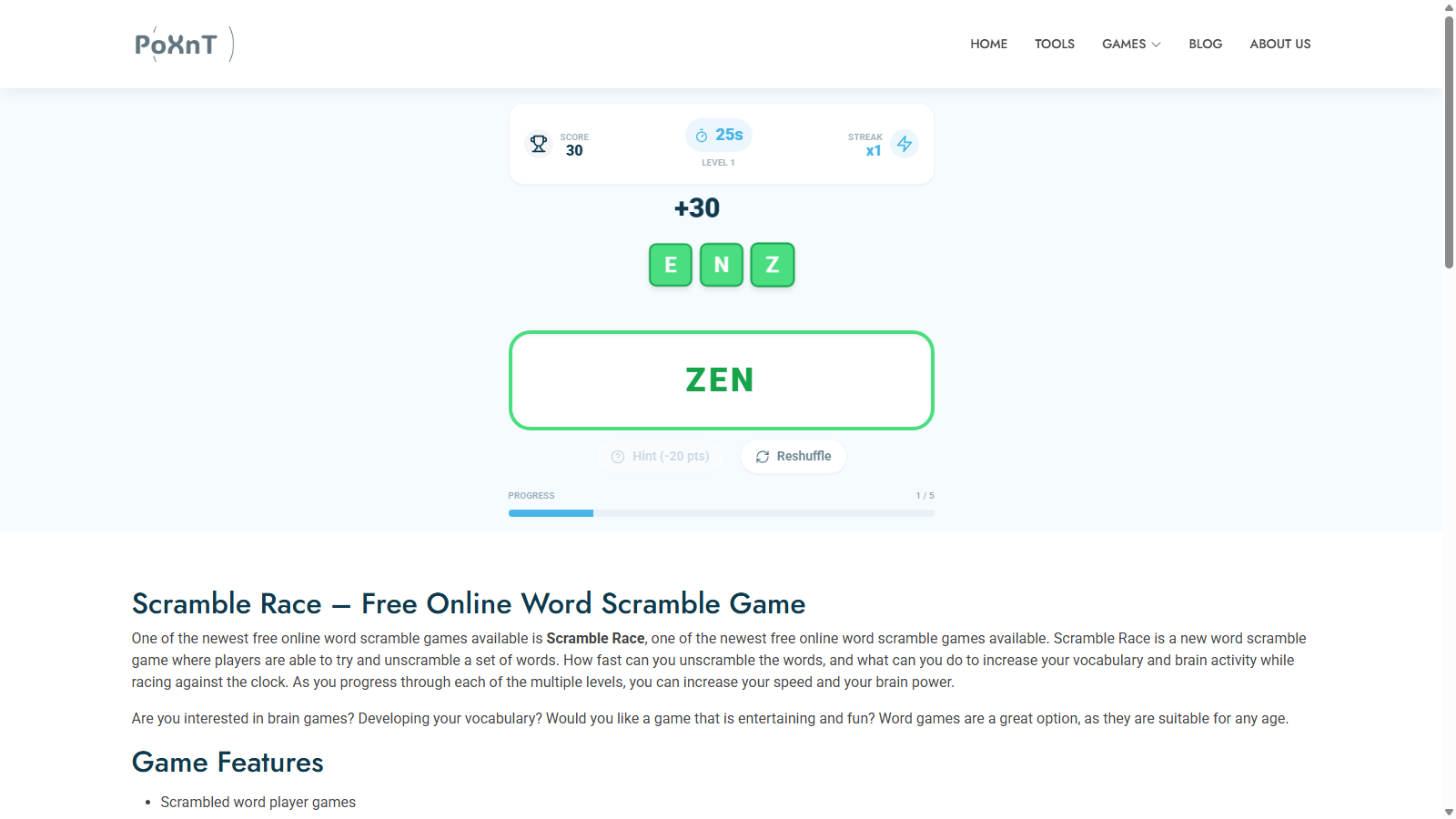
As far as word jumble games go, Scramble Race is (arguably) the best. Unscramble the provided letters into words before the time runs out. In addition to the standard jumble game mechanics, Scramble Race also features a score system, streaks, and increasing levels of difficulty, making the game more competitive.
According to the makers of PoXnT, the game has five levels of difficulty. Stump yourself? You can always use a hint or reshuffle the letters.
Crossword lovers would enjoy this game because it is much faster because you have to think rapidly. You learn to think in terms of the places letters will likely be.
Scramble Race is at its best convenient and accessible, allowing you to even get a few rounds in on a quick break at work. Solve a few rounds and try to beat your high score. Using a hint will prevent a particularly troublesome word from stalling your progress, but it will help at the cost of your score.
The game does a good job of gradually increasing difficulty. New players learn the mechanics as the game eases them into playing under pressure with difficult words.
Best for: Vocabulary practice, fast thinking, spelling, and score chasing.
2. Word Search — A Classic Pattern-Recognition Puzzle
Play here: Word Search on PoXnT
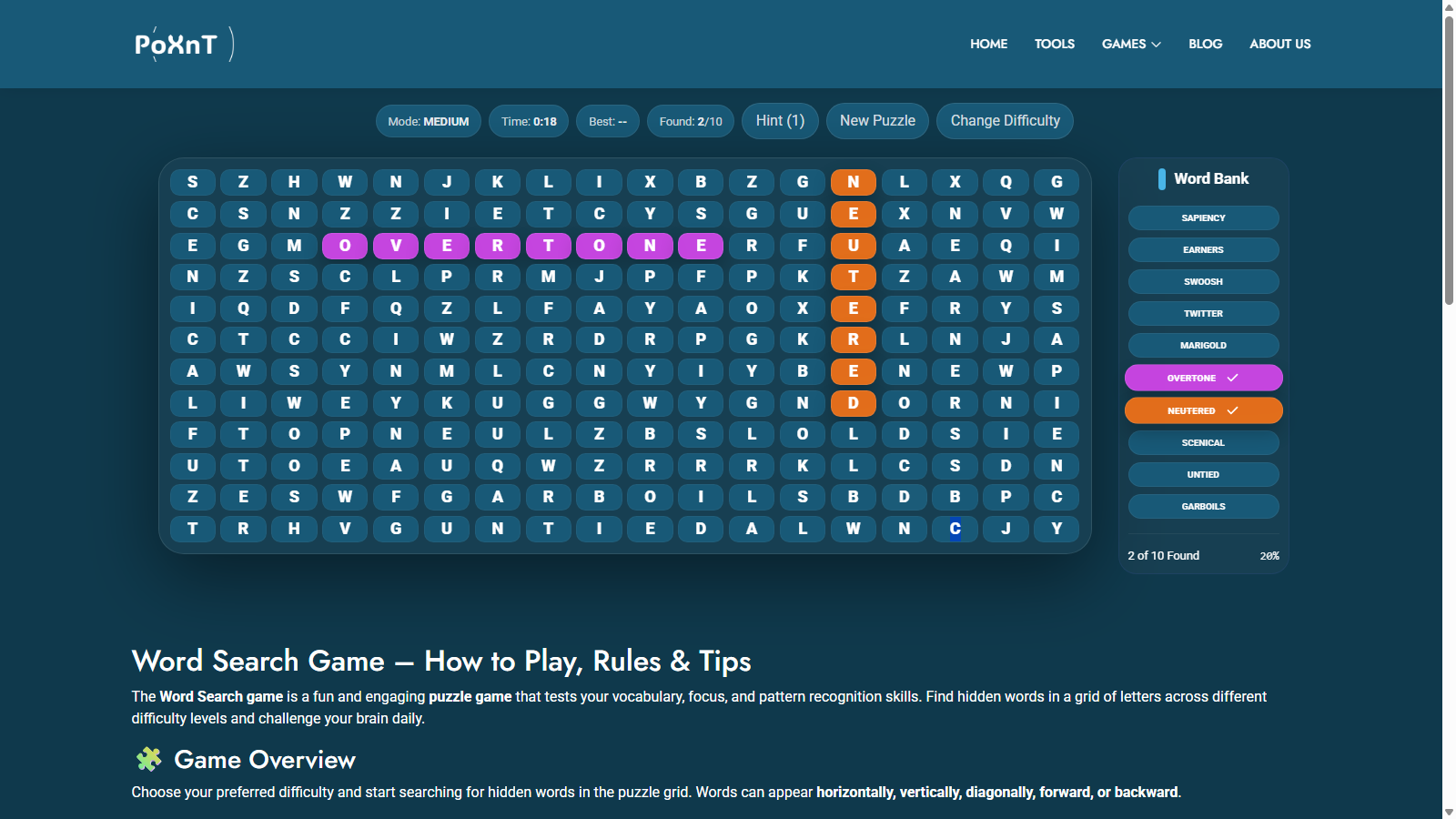
Word Search has a grid filled with letters, and you identify words that can be arranged in any direction or reflected. PoXnT has varying levels of difficulty, in addition to timers, tracking, and hints, with puzzles that refresh.
Word Search has a very small learning curve because of the straightforward design. Simply search the constructed grid, find the presented word, and select the corresponding letters in the grid.
Drawing the wanted patterns out of the noise can be a challenge, and it becomes even more difficult when words are arranged in reverse, or diagonally, or when letters are arranged with similar characters in distracting combinations.
One benefit of Word Search is that it becomes a focused, engaging task for people that have busy working days with lots of interaction and communication because it has little to no complicated systems. You can start and solve a puzzle quickly.
Less frequent letters in the English alphabet make words easier to spot, and scanning each row and guessing the locations of the words is more efficient than looking for letters randomly placed in combinations of English letters. It also helps to look for letters like Q, X, and Z.
To play, search for words arranged in a row, then search in a column, and finally in a diagonal. This design helps you solve Word Search faster.
Best for: Concentration, visual scanning, vocabulary, and relaxing play.
3. Wordle — Six Attempts to Find the Word
Play here: Wordle on PoXnT
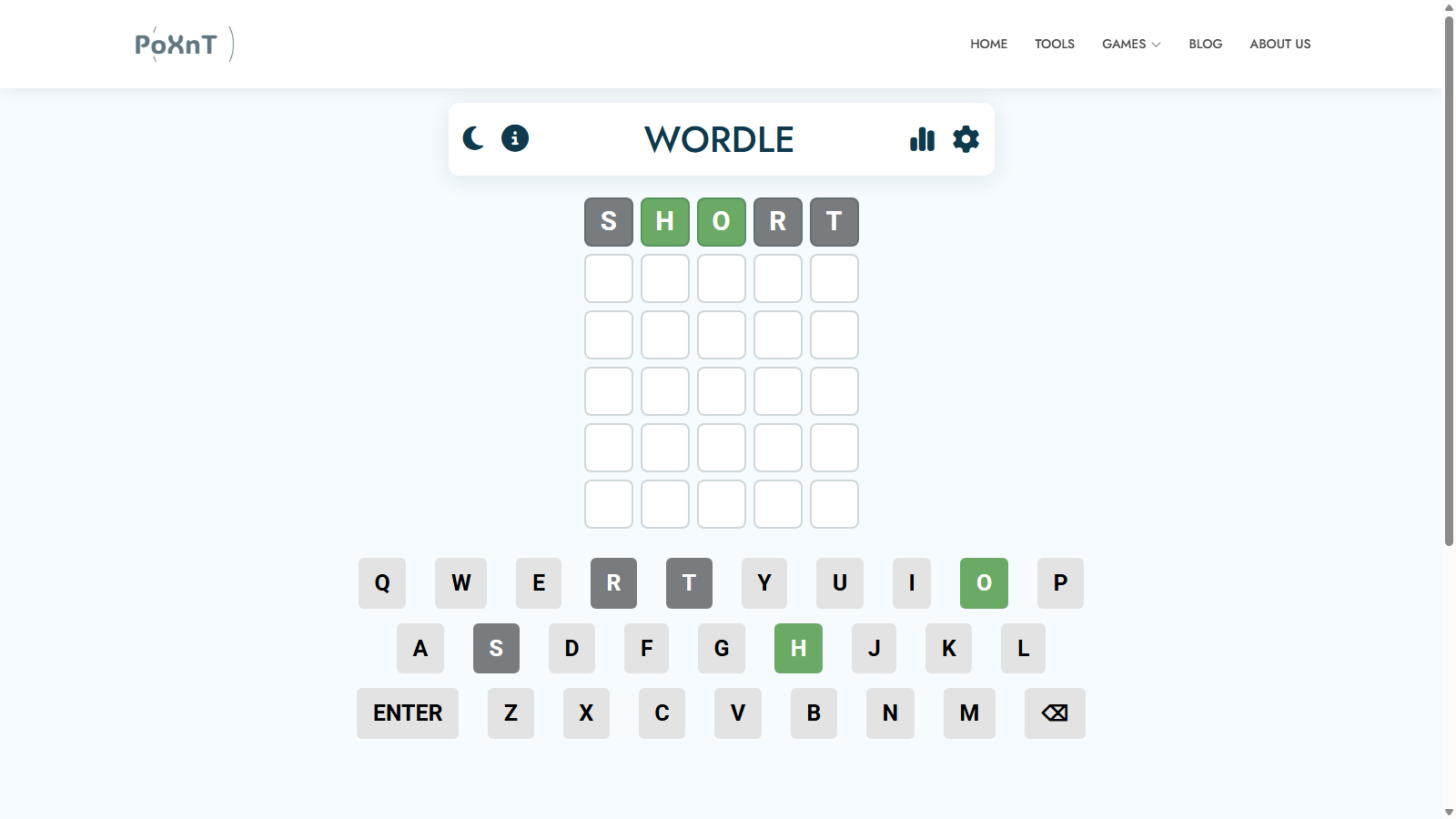
Wordle challenges you to guess a hidden five-letter word in six attempts. After you submit a guess, the game marks letters with three different colors. Yellow indicates letters that are in the solution word, but are in the wrong position. Green indicates letters that are in the solution word and are in the correct position. The last color is gray, and indicates letters that are not in the word at all.
The other features in wordle that provide it an edge over conventional wordle are: player stats, a stricter hard mode (which I have yet to try), and the option to create a custom word challenge for friends.
Wordle uses two different types of thinking: verbal and logical. Given the nature of wordle, poor starter words can result in low, if any, progress toward a solution. In contrast, starter words with considered letter placements can result in high progress, as multiple letters that may be in the solution can be tested.
Early in the game, several possible solutions that have not yet been eliminated are still likely. Guessing a letter that has already been proven not to be in the solution is a waste. Trying to solve the puzzle too early may also trap you.
Finding guess words that contain a high frequency consonant and vowel pair is a great way to start the game. After the first guess, the focus should be on eliminating as many possible solutions as needed rather than solving the puzzle. Testing the solution with a strategic guess instead of immediately attempting to solve the puzzle can be very useful when there are multiple possibilities that still remain.
One word that could possibly end in “ATCH” for several guesses could be “MATCH”. Instead of guessing “MATCH” and then “PATCH” and then “WATCH”, etc., one word could be used that tests all of the first letters that could possibly be the solution.
That balance between vocabulary and elimination is what makes Wordle so replayable.
Best for: Word logic, deduction, daily routines, and shareable challenges.
4. 2048 — Simple Rules, Serious Strategy
Play here: 2048 on PoXnT
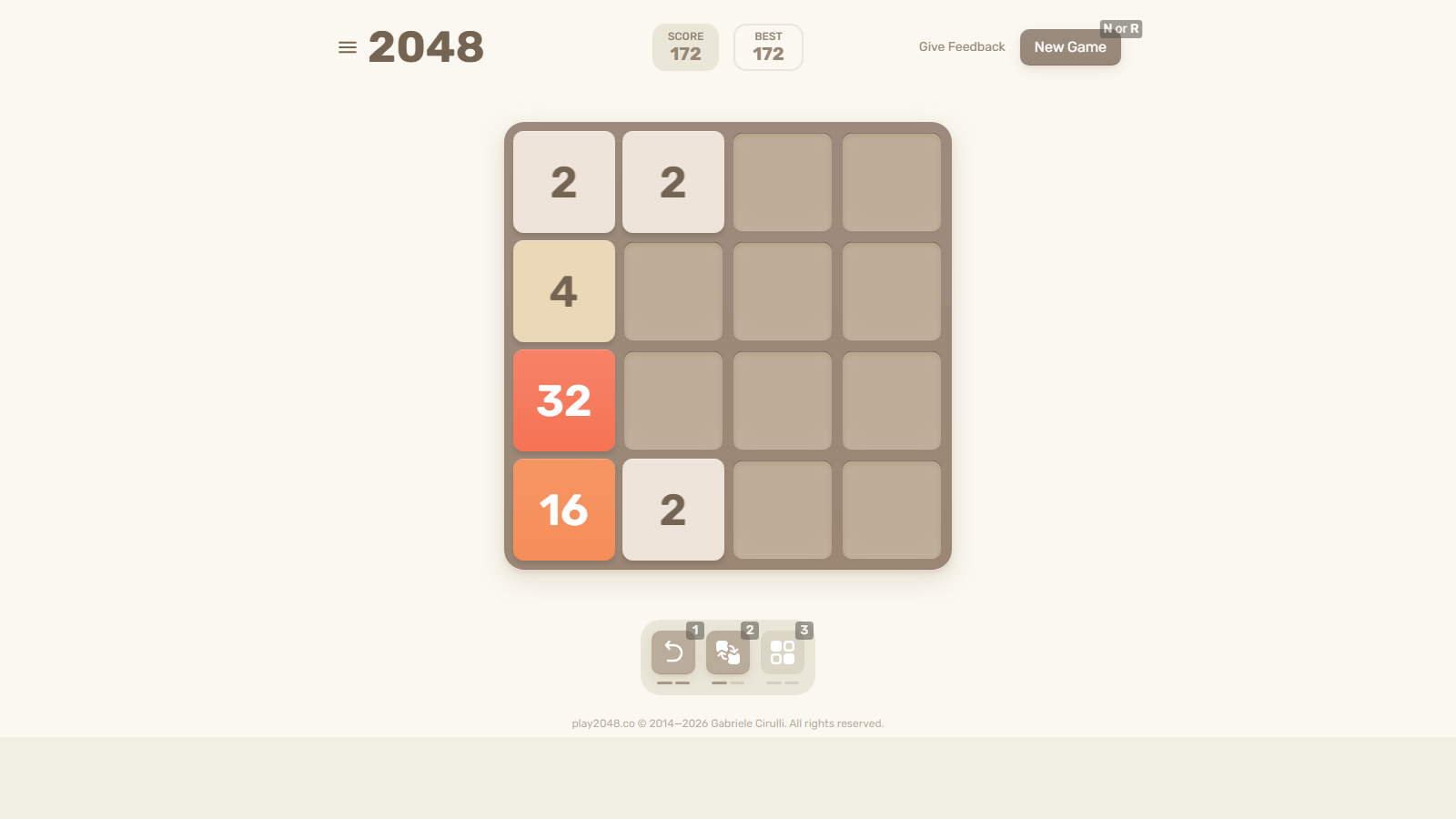
2048 is a fun, modern take on a sliding number puzzle. You can move the tiles in any direction, and the numbers will merge into a larger tile when they meet. The goal is to keep merging numbers until the 2048 tile is made.
Every move adds a new tile onto the board, so be careful making moves. Gradually, the board will fill and the number of moves you can make will be limited.
The design of the game is simple and easy to learn, but still requires some level of strategy. There is a fine line between a manageable board and a number of random large tiles.
Good players, for example, have a manageable board and a tile in a corner in descending order. This also makes it less likely a small tile will be trapped.
2048 is undoubtedly one of the best puzzle games online. There is an excellent depth to the game, since beginners can have fun just merging numbers, and experienced players can think a number of moves ahead to well past the 2048 score.
A good puzzle also requires some flexibility. Just because a move would make the board look nice, doesn't mean it's a good move.
Avoid swiping to merge numbers. Think about the larger impact and how it limits the moves that can be made.
Best for: Planning, number patterns, spatial organization, and high-score attempts.
5. Tetris — The Timeless Falling-Block Puzzle
Play here: Official Tetris online
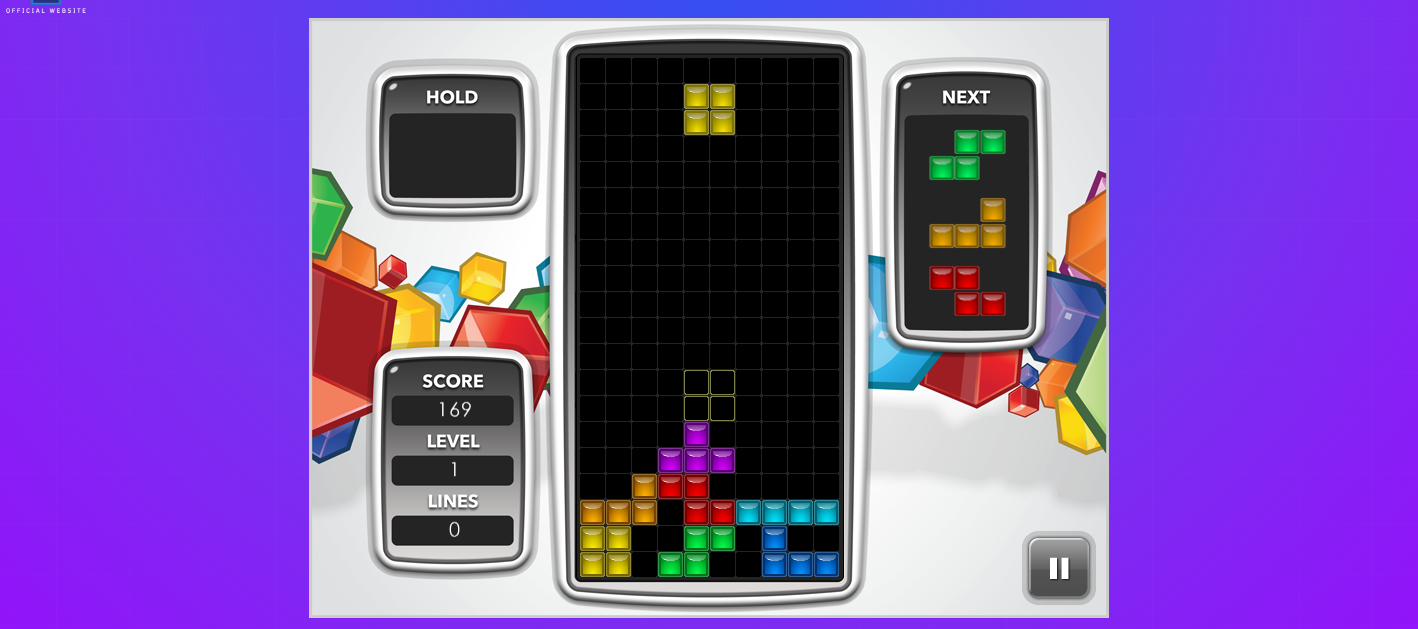
Tetris is an iconic game design where users must place falling geometric shapes into a playfield to create lines across the playfield that then disappear. Boards fill as you play, and to win, you need to clear lines by placing shapes correctly.
You can find the web browser version on the Tetris main page.
Although the beginning of a game of Tetris may seem slow, the game will speed up as time goes on. It will require you to think faster and to make placements that you may think are ok. Poor placements may stack up and make the game more difficult as time goes on.
Tetris is a game that you can play to get better at, but it is not a game that you can significantly perfect. Instead of focusing on the placements that may "perfect" the game, practice efficiencies by preparing for the possible placements that will come and making sure there are not gaps in the stack.
This game offers a good balance on short term and long term thinking, which an adult audience will preferably enjoy.
Flat surfaces help you think of how to approach your next placements. It keeps your future placements less restricted as well. It will help you clear more lines at once if you leave a gap for a long piece, but from a long term strategy, that placement is risky.
Best for: Spatial reasoning, reaction speed, planning under pressure, and replay value.
6. Sudoku — Pure Number Logic Without Arithmetic
Play here: Sudoku.com
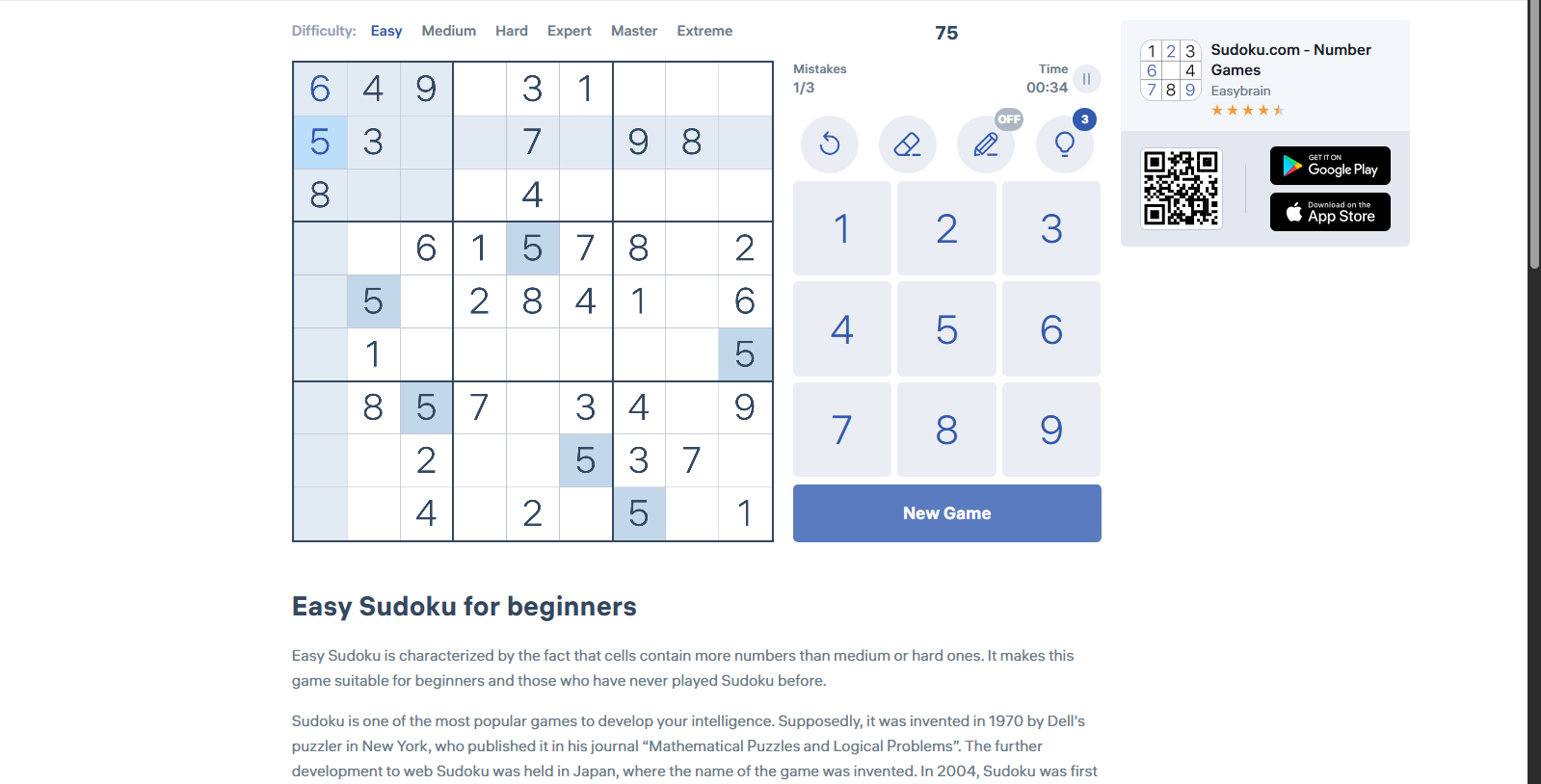
Sudoku uses a 9x9 grid and each grid square is contained in a smaller 3x3 grid. The aim of the game is to fill in all squares using the digits 1 through 9 such that each of the digits 1 through 9 appear only once in every row, column, and smaller 3x3 grid.
Sudoku uses numbers, but that is about the only similarity it has with math. It is a logical and elimination game.
Sudoku.com provides multiple modes of play from easy to extreme, as well as built in note-taking, undo, erase and hint tools.
Scalability makes Sudoku one of the best puzzle games among adults as beginners start by learning undisciplined scanning techniques and more advanced players rely on candidate notation and more elaborate elimination patterns.
The most common mistake beginners make is guessing answers. In a completed Sudoku puzzle, each grid square should contain only one digit. A missing digit is nearly always a result of contraints elsewhere on the grid that will be revealed by scanning other areas of the grid.
Focus on filled in subsections of rows, columns, or the smaller 3x3 grids and note any contraints that these subsections contain.
As the difficulty of the puzzles increases, obvious placements will occur less and less. You will need to start comparing contraints across multiple sections.
Sudoku is best suited to people that prefer calm reasoning over an accelerated pace. There is never any reason to hurry unless you are setting personal goals to improve your completion time.
Best for: Logical elimination, patience, concentration, and difficulty progression.
7. NYT Connections — Group Words by Hidden Relationships
Play here: The New York Times Connections
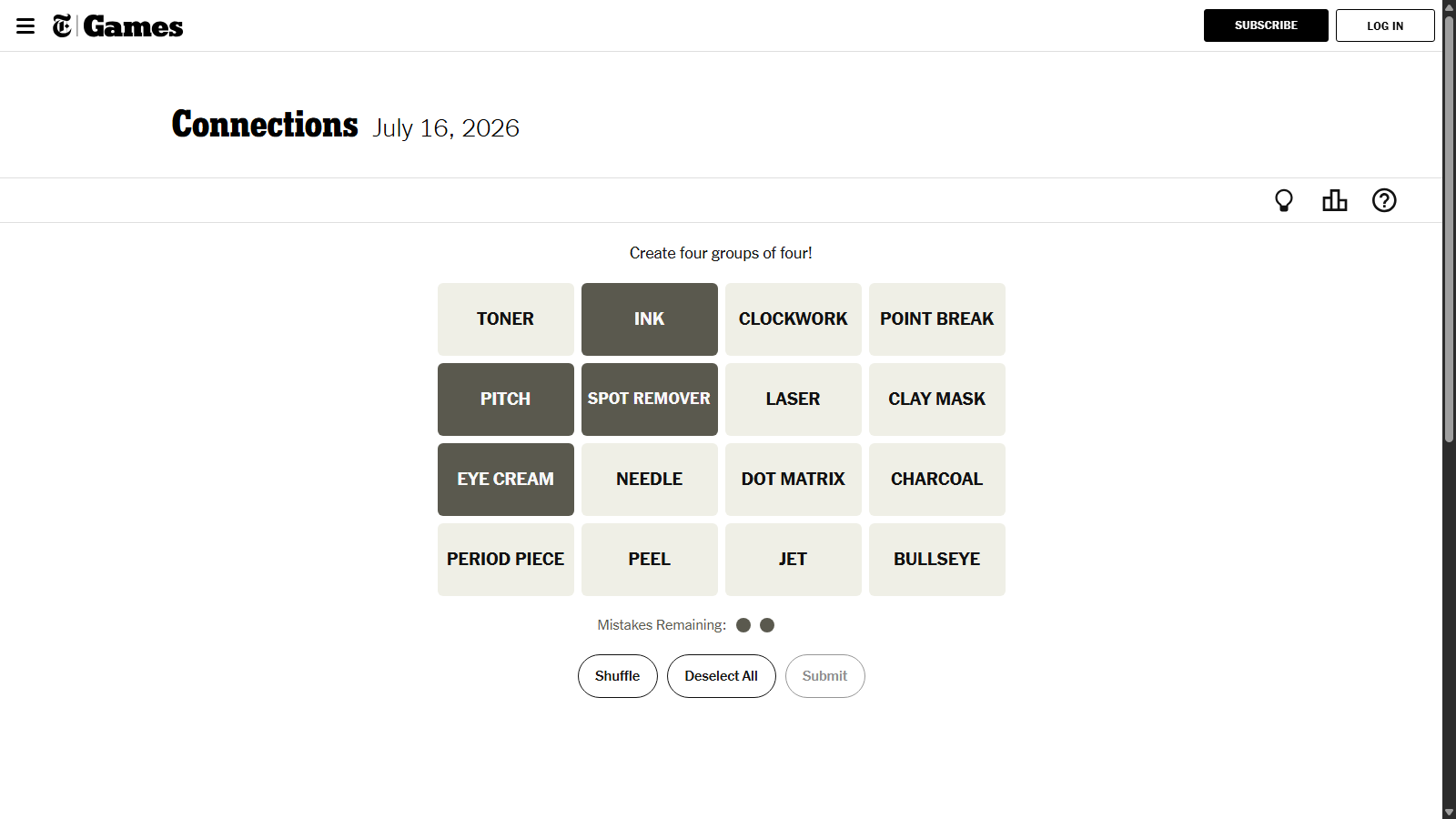
Connections gives you sixteen words and has you group them into four sets of four words that have something in common.
The trick is that quite a few words can be grouped in several ways and some words have been included in some groups just to distract you.
The New York Times provides Connections on their Games website and provides a description of the game and where to find it on the web in their official help documentation.
Connections is different than a typical vocabulary test in that you can't just understand the meaning of each word and move on to the next. You have to compare different words, understand the traps that have been set, and not be tricked by a group that seems to fit, but in reality is incomplete.
This is probably what makes it one of the more enjoyable language puzzles for players over the age of 12. It's a game that rewards you for having a lot of knowledge, being quick on your feet, and being able to change your way of thinking when your assumptions are proven wrong.
Always look at the other 12 words before submitting an answer. If you are leaving behind a collection of words that don't make any sense, you probably are wrong. Solving Connections usually has more to do with figuring out the way everything is structured and not just determining a category.
Best for: Lateral thinking, word association, general knowledge, and daily challenges.
8. Jigsaw Explorer — Relaxing Online Jigsaw Puzzles
Play here: Jigsaw Explorer
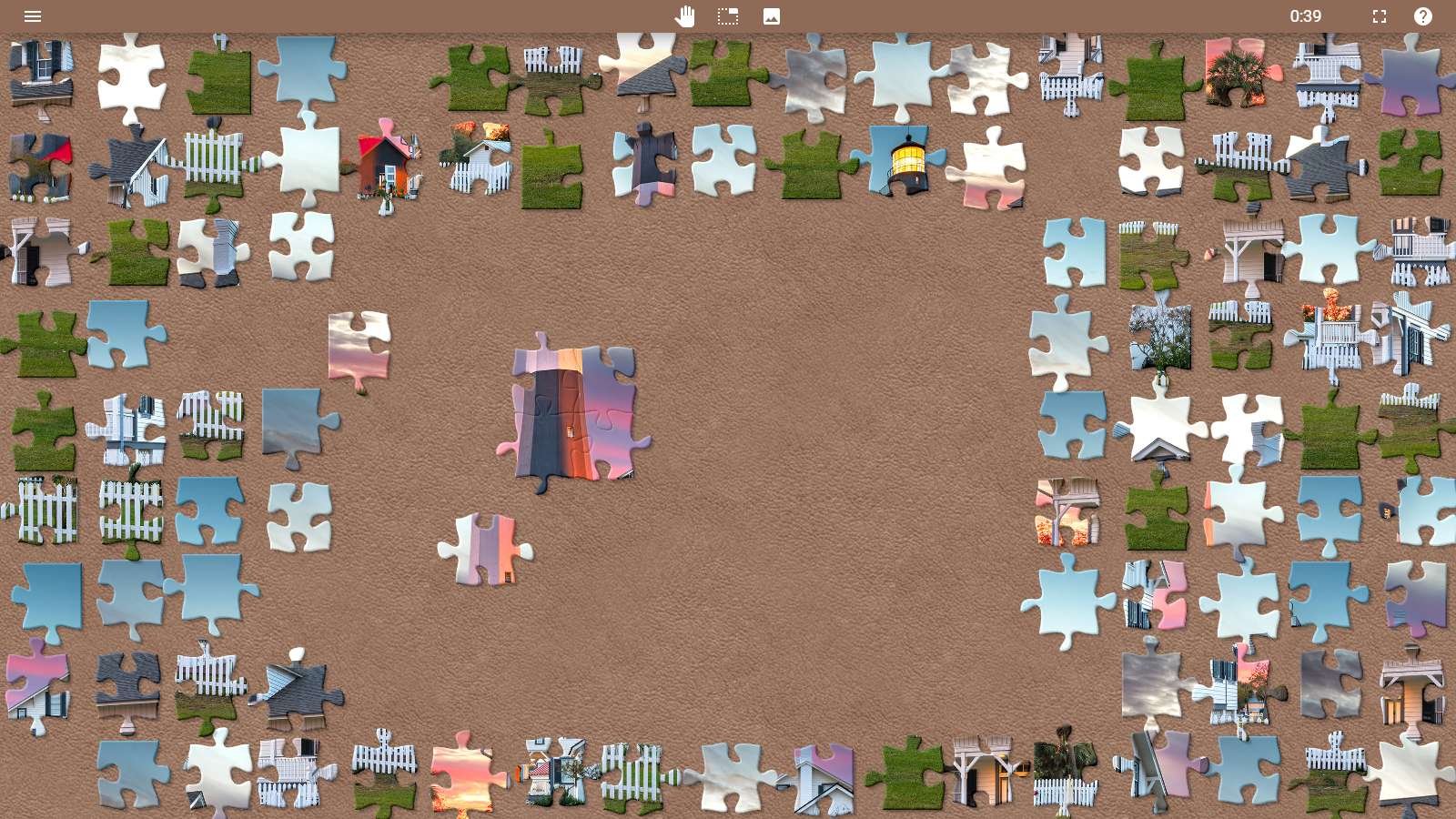
You don't need a timer or score multiplier in every puzzle game. Jigsaw Explorer knows that the fun of most puzzle games is using your logic to piece an image together.
They also have online jigsaws, designed for the player to have a family friendly experience and easy browsing. Plus, they save your puzzle progress in the browser. That means you can play for as long as you want and then come back to your puzzle later.
Jigsaw puzzles are fun because they test your visual memory and shape recognition. And of course, they take a lot of patience. They also take a different mental pace than most word games and number puzzles.
Instead of searching for a single solution, you make a case for your educated guesses piece by piece and then by color. The more you put in the puzzle, the less guesses you have to make and easier it gets.
First grab the corner and edge pieces. Then sort pieces by the color or look that they share the most. The sky is usually easy to spot in a landscape puzzle and you can sort the remaining pieces by the section that the image shares with the rest of the puzzle.
So Jigsaw Explorer is probably a better choice if you want a game with a more relaxing pace than most.
Best for: Relaxation, visual organization, patience, and longer sessions.
9. Little Alchemy 2 — Experiment Through Combinations
Play here: Little Alchemy 2
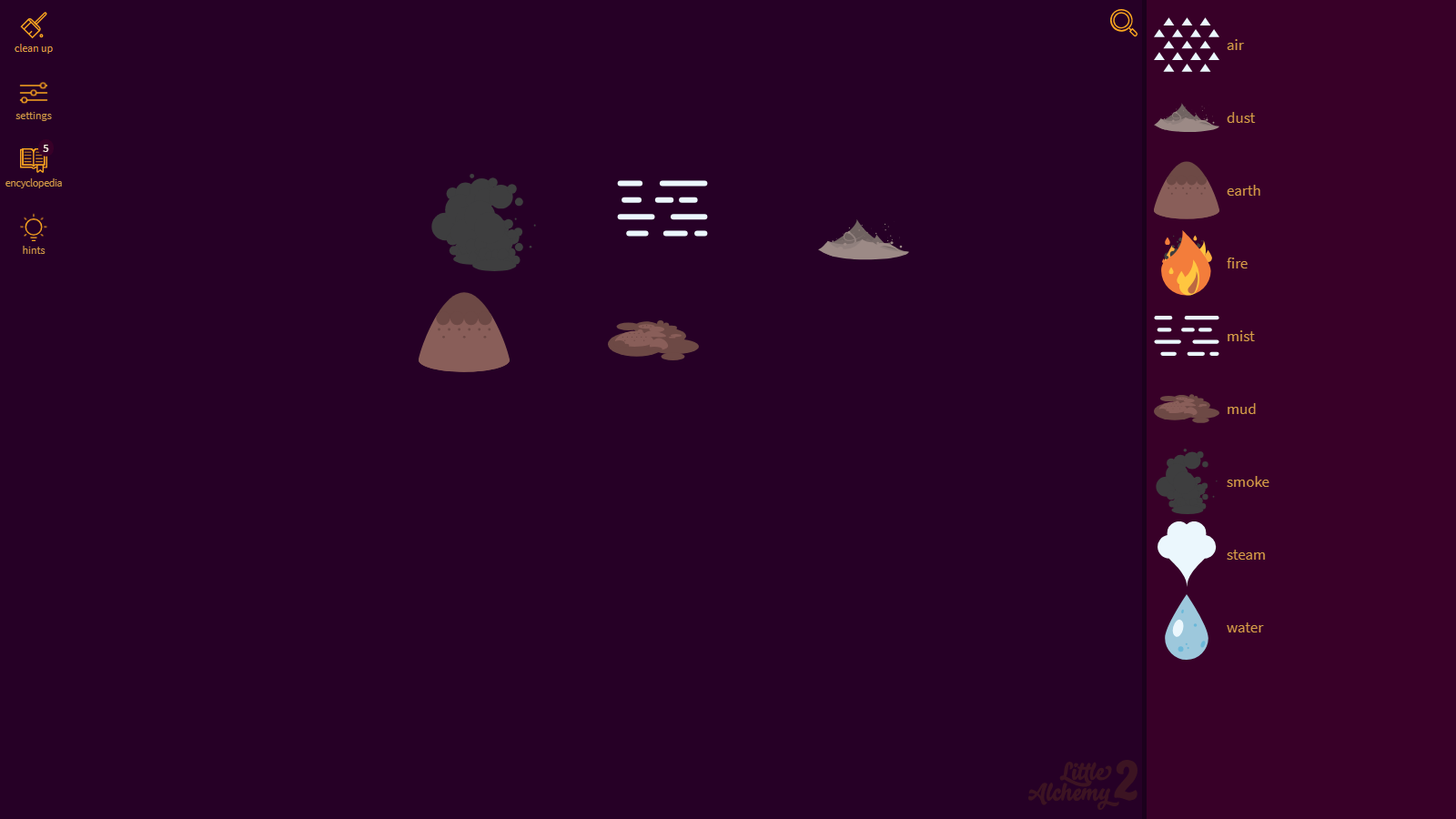
Little Alchemy 2 introduces simple building blocks. By combining them, you can generate new elements and discover new combinations. The more discoveries you make, the more combinations become available, thus encouraging you to keep experimenting.
The official Little Alchemy 2 hints website reveals that there is a browser version, and also offers help to stuck players.
Unlike Wordle or Sudoku, there is no single solution to master in Little Alchemy 2. You are working on a big network of connections, and some combinations are indeed logical, while others are a result of jokes or metaphors.
Little Alchemy 2 can indeed be defined as a puzzle game, but it has more of a creative character, while other types of puzzle games are analytical. You need to make a hypothesis. Test it. And based on the results, make a new hypothesis, and so on. Me no combinations are lost because of failed attempts, but rather they become restrictions in your hypothesis.
If this suddenly sounds helpful to you, give Little Alchemy 2 a try, especially if you don’t like time limits. You can experiment for as long as you wish, and then return and continue your discovery collection.
Try to refrain from looking at answers too quickly. The bigger, and more gratifying reward, is to find an unexpected answer on your own. Only after you have indeed explored all the elements give in to you to the hints.
Best for: Experimentation, creative association, curiosity, and open-ended progress.
10. Mahjongg Dimensions — Tile Matching in 3D
Play here: Mahjongg Dimensions on Arkadium
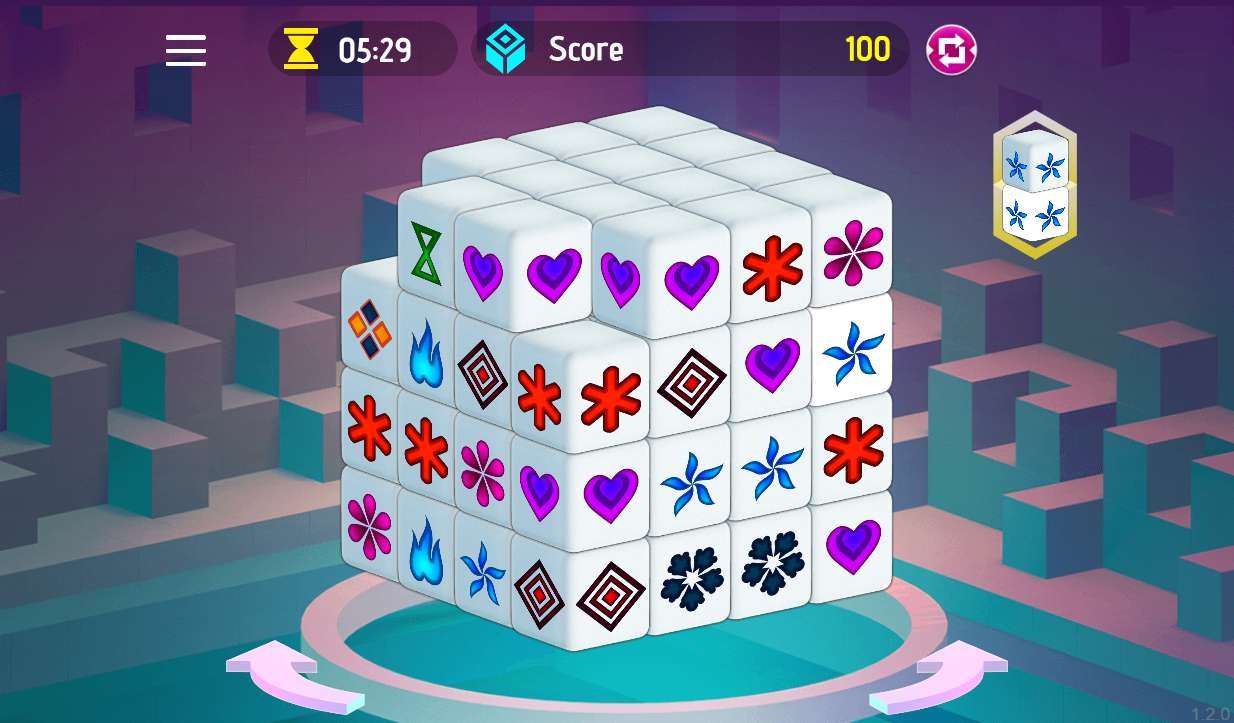
Mahjongg Dimensions is a tile game that gives players a three dimensional puzzle. The goal is to clear the game board by locating pairs and eliminating each piece. The game is unique since players rotate a structure of tiles and elevate pieces to show parts hidden from view. Mahjongg Dimensions has many advancements over traditional matching games.
Because hidden tiles become visible from different angles, the game requires more spatial awareness than a flat matching puzzle.
Arkadium's version of Mahjongg Dimensions includes several advancements over the typical tile game. It has a timer, scoring bonuses, and a limited shuffle tool. Players score by eliminating all pair tiles before the time runs out.
The best moves are not always the available tiles. Players need to remove pieces that provide clear views of hidden structures with the trade off of giving better options for future moves. Future moves need to be balanced with the time remaining on the timer and board management. Players also are penalized for not rotating the structure.
Players will have to make the best use of the shuffle option, since it should only be used when no moves are available.
Mahjongg Dimensions is a relaxing tile matching game with a moderate level of strategy that slowly increases throughout the game.
Best for: Visual matching, spatial awareness, memory, and timed strategy.
How to Choose the Right Puzzle Game
Picking the right game all depends on the player. Mahjongg Dimensions is great when players want to match and think about where and how pieces should be placed. It is also great when players want to think about puzzles.
For structured logic and planning, try Jigsaw Explorer and Tetris. Scramble Race, Word Search, and Wordle are great when players want to include language and vocabulary based games. Little Alchemy 2 is great for experimentation and Mahjongg Dimensions is great for spatial strategy paired with simple matching.
Session length matters too! Wordle and Connections are great for daily, quick puzzles. Scramble Race and Tetris are great examples of short and fast puzzles. Sudoku, jigsaws, and Little Alchemy 2 can hold your attention for longer.
Not all difficult games are useful. A challenging game that is way out of your level may cause frustration instead of enjoying the game. Make sure to select a game that is challenging but not out of your league.
You may also want to consider exactly how much repetition you can take. Tetris and 2048 are good examples of the same rules being applied to every game, but each game has a new board and creates new challenges. Wordle and Connections and Jigsaw and Little Alchemy 2 are good examples of games where the player feels like they are making progress to the goal.
Where to Find the Best Puzzle Games Free of Downloads
If you don't want to download a game, browser games are the easiest option. PoXnT provides four fast, opening, web browser games and a lot more.
Free or free-to-access puzzle experiences are available on other established websites that also use advertising or optional accounts, subscriptions, or premium features.
Features and access models may change, so always check for yourself to the game page to see if it is free to access. Suspicious downloads, browser extensions, or excessive permissions are clone websites that you should never trust!
Legitimate browser puzzle games don't require unrelated software and start right inside the page.
The search phrase best puzzle games free often produces hundreds of low-quality gaming portals. Instead of opening random results, use direct links to known game pages and bookmark the titles you actually enjoy.
Benefits of Playing Puzzle Games Regularly
Puzzle games can be helpful for downtime and can be mentally stimulating, but let’s not get carried away. No game on the internet is going to be a substitute for sleep, exercise, learning, or working. No game is going to boost your brain and your IQ.
What puzzles help you practice is repetitive engagement with a variety of activities. These include things like seeing patterns and practicing planning. They can help you with logical deductions, verbal recall, and visual scanning.
Puzzle games can provide a more orderly break than mindlessly scrolling on social media. A puzzle has a definite goal and a clear stopping point. You solve the word, finish the jigsaw, or clear the level. All of which can help you create a more structured and satisfying break.
Play with intention. 10 minutes of play can be a good break but 2 hours of score chasing, while important things went unattended, is still procrastination, just because the game requires mental engagement.
Set a time limit before starting when you are busy and avoid them extending your break. Puzzle games are created to make you think you can get just one more try, level, or high score. The game won’t go anywhere after your responsibilities are done.
Frequently Asked Questions
What are the top online puzzle games for short breaks?
Short and sweet puzzle games like Wordle, Connections, Scramble Race, and 2048 are perfect for a quick distraction. The rules of these games are typically simple enough to learn in a few minutes, and one round can usually be completed in less than 10 minutes.
What are some of the top puzzle games for adults that focus on logic?
2048 pairs well with Sudoku. Both Sudoku and 2048 rely on logical and careful gameplay. Tetris is always a classic and if you're looking for something a little more challenging, Mahjongg Dimensions is a fun 3D game that relies on your logical and spatial awareness.
Are online puzzle games free on browser games?
While most of these games are free to play, advertising, optional accounts, subscriptions, and or pay to play features can all impact your browser game experience and the game’s accessibility. Before playing any of the games, be sure to check the game page for the latest information on their accessibility.
What puzzle game helps the most with developing vocabulary?
Scramble Race, Word Search, Wordle, and Connections are all great options that encourage different aspects of language. Scramble Race is great for spelling, Word Search is excellent for word recognition, Wordle is about vocabulary and deduction, and Connections challenges players to think about the relationships between words.
What puzzle games are relaxing instead of stressful?
Jigsaw Explorer is a great option because most Sudokus are a little too challenging. Word Search with no time limit is always a good option. Little Alchemy 2 is another good choice because it is super relaxed. Tetris and Mahjongg Dimensions are great games, but can be a little more stressful because of the time limit.
Are these games playable on a mobile device?
Most puzzle games that are browser games can be played on mobile devices. Because the games are designed to be played from different browsers, the layout of the game may differ a bit from browser to browser. An updated browser and a good internet connection will put you in the best position to play.