10 Best Online Games: Mind Games and Brain Challenges
Games you can play on the web are better than scrolling social media for an hour. Games give you goals and puzzles to focus on, combined with feedback, and are very beneficial. Games that exercise the mind tend to be popular because they test things like memory and logic, as well as different strategies and even words. You can play these games without the hassle of a large app download.
There are 10 games in this guide for you to play online that are all fun to play and will help exercise your brain. Four of the games are from PoXnT, and those are followed by seven more well-known games. You will find a description of the goal of each game, as well as the reason for its popularity, and lastly, the best strategies to play the game.
Browser games do not make you smarter, and that’s a warning we will give you. Most of those claims that they do are just marketing tactics. The value in the games is that they get you to think and be an active problem solver. Most puzzles that are entertaining lead you to practice pattern recognition and other testing strategies. Learning from mistakes is always great to do, and most of these puzzles are meant to be fun.
Why Play Online Mind Games?
Fun puzzles that are great to play are easy to start, but tough to complete and win. The instructions can be simple, but scoring can depend on more than clicking. You can be challenged to find words in a game as letters keen to jumble together, or a different type of game may require you to be quick to get rid of numbers. You can even be tested on your ability to place things or keep track of information in a game.
Browser access eliminates barriers. People can play games during breaks for shorter amounts of time. Seeing as there are time-based, score-based, rating-based, streak-based, or level-based record systems, you can track personalized progress.
Despite some games being labeled brain games, not all of them deserve your time. The best games generally offer:
- Rules you can learn quickly
- Choices that require you to think, unlike tapping that is simply repetitive
- Decisions that offer immediate feedback
- A variety that maintains interest over the length of the game
Games should require you to think. If you can achieve success while looking away from a game, you are just being entertained. There is not a real challenge.
Why Mind Games are Suitable for Short Sessions
There is a such thing as mental fatigue. A two hour challenge is not better than a focused fifteen minute challenge. Short challenges are better because you get to complete a challenge, rather than an open-ended game. You can do one word challenge, one number challenge, or one tactical game.
Short breaks can turn into long, difficult to control procrastination. You should determine the goal (number of challenges) before you begin. A timer can help in situations where the game is intended for you to play over and over.
Another way to improve your system is to use mixed types of activities and games. Just playing trivia and recall-related games only improves your memory and recall. Playing only Sudoku improves your game within a one-rule system. A good balance of activities can include a word challenge, a vision game, and a strategical puzzle game. Having different types of activities prevents the improvement from being mechanistic.
1. Scramble Race
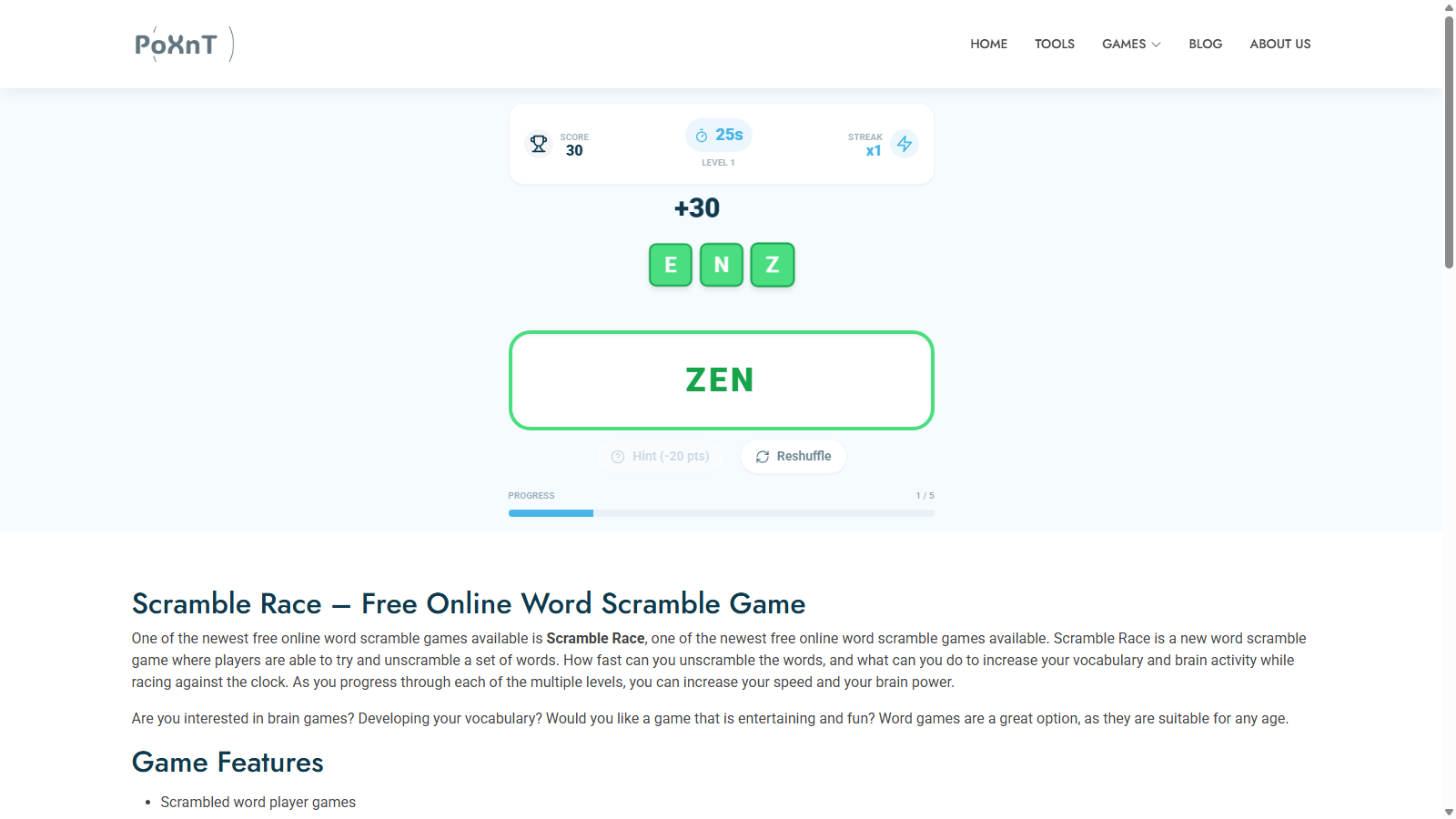
Scramble Race is a game where you have to guess the right word from a jumble of letters. There are five different levels of increasing difficulty. One of the features includes a points system, streaks, hints, and a reshuffle. These all improve engagement more than anagrams.
This game is an excellent choice for a vocabulary game lover. The game is also easier the more you recognize your vowels, prefixes, and suffixes. The letters will not be completely mixed. A more efficient game would be to break down the letters into different groups to see if they fit into a word.
Be careful with the hints as they can make your score worse. The reshuffle is a better choice when stuck. The letters may have a new jumble and still make an answer come more to the surface. A word will better appear when the letters are reshuffled rather than just jumbled. Guessing should be the last resort, and time should be managed.
2. Guess the Number
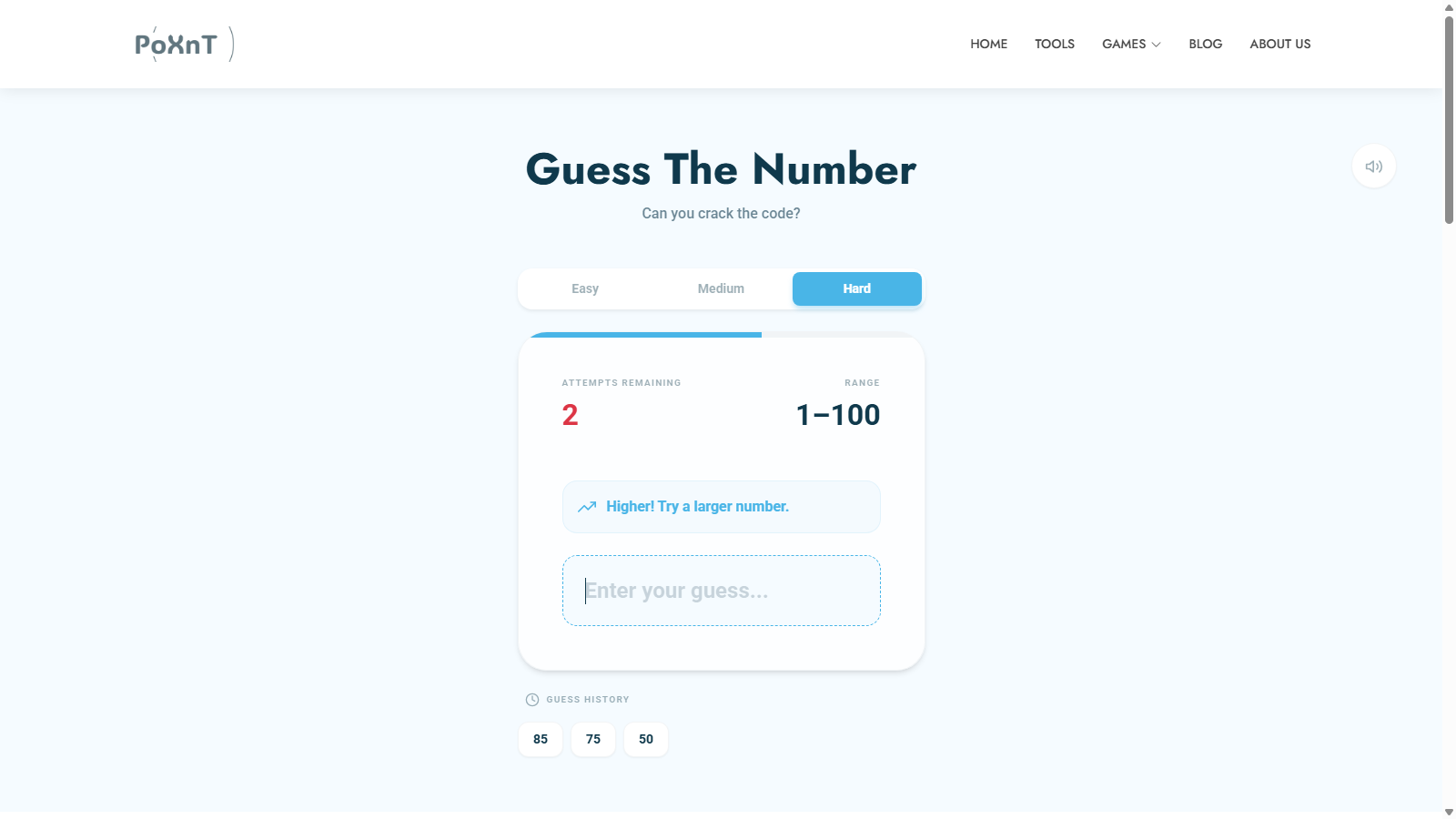
In Guess the Number, you will be told a number that you have to guess that is higher or lower. The PoXnT version gives a limited number of guesses as well as different difficulty settings. Reasoning will matter more than luck.
Guessing an average of the remaining range from the previous guesses signals the next best move. This assumes the number is between 1-100. Without other information, the first guess can be 50 because any number, either greater or lower than the guess, can only be in the lower half or the remaining half of the total range. The next guess, in this case, would be the average of the remaining range from the half of the greater numbers (51-100) and should be 51 or any number is unacceptable.
This is widely called the binary search because the aim is to halve the remaining range of numbers. The lower and upper limits should be recorded. This is more fun logically choosing the guesses than the previously mentioned gambling.
3. Simon
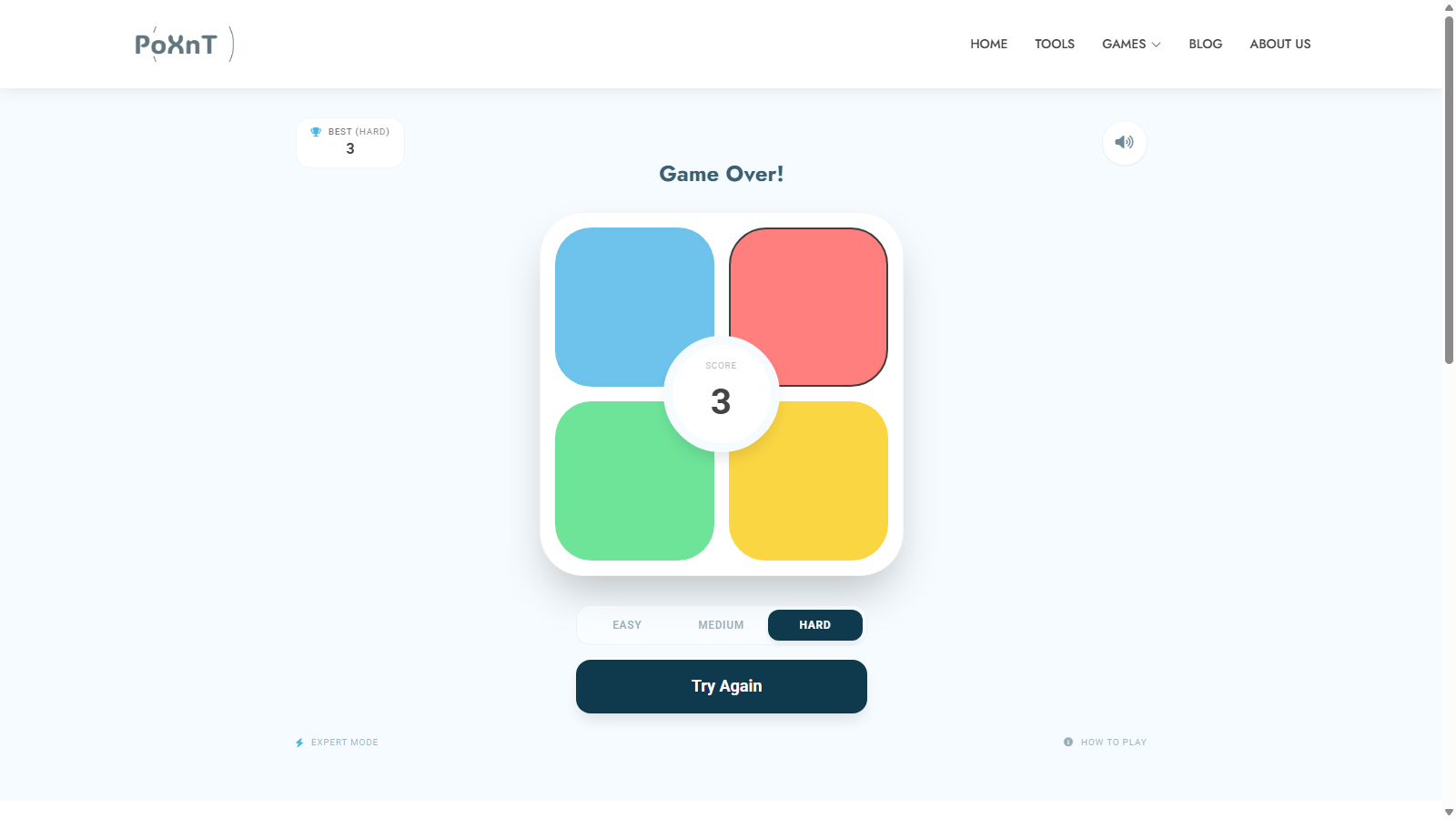
Simon is a game where there are four colored buttons. The buttons light up in a particular order, and the player has to repeat the pattern. Stage by stage, the order of the buttons is added. The PoXnT game has easy, medium, and hard modes. In the hard mode, the order is shown at a higher speed.
The game is simple. However, the increased order exposes weak concentration of the player. Even one distraction can ruin the game. Instead of remembering every color, divide the sequence into chunks. For example, a pattern of eight steps may be remembered as two groups of four.
Some players also assign a sound, number, or direction to each button. This turns a visual sequence into either a rhythm or a short codex. The method of choice should be the one that produces consistent recall. When there is an error, do not try to remember the order that was lost. Instead, determine the point in the sequence that was memorized.
4. Schulte Table
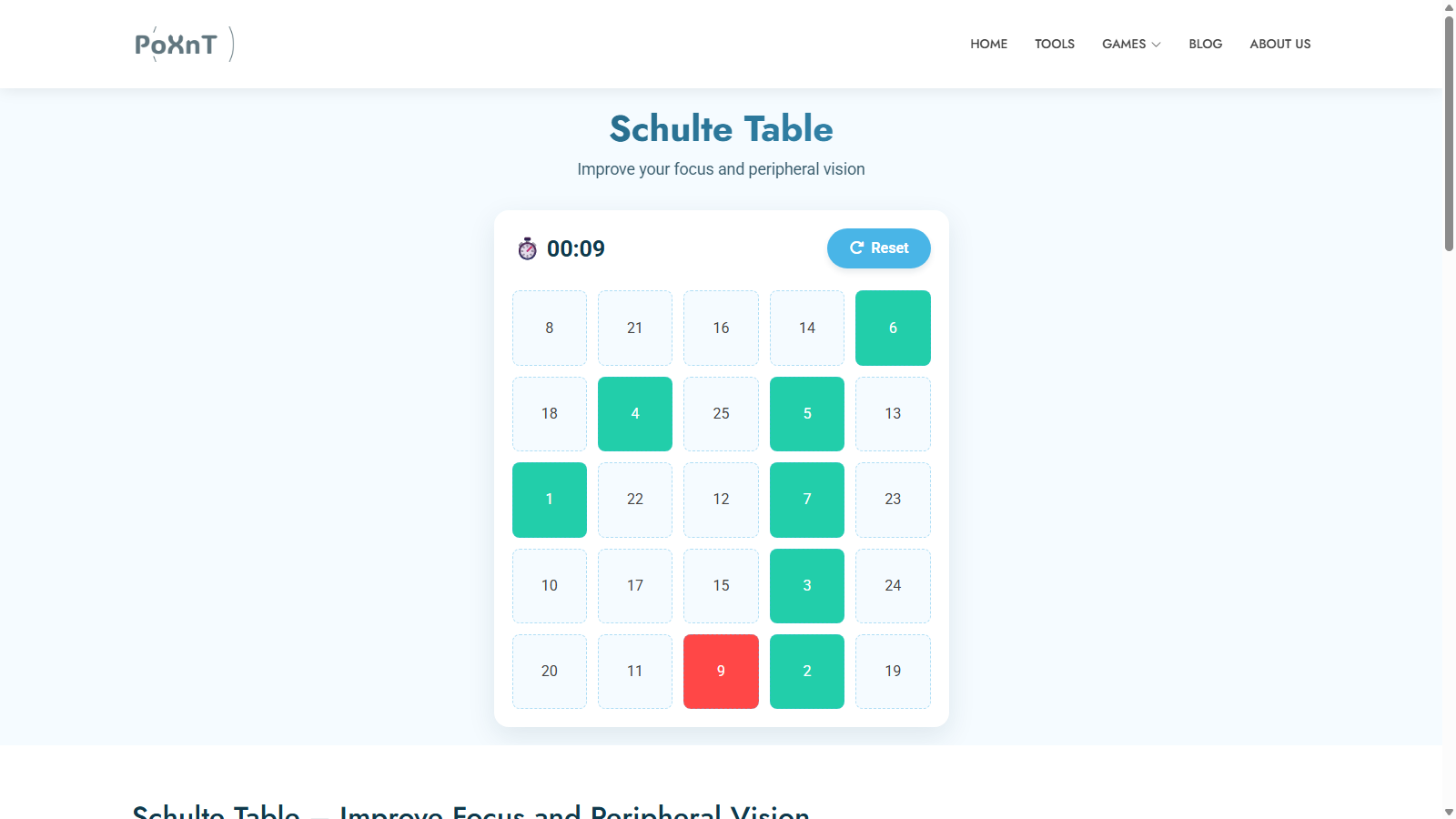
In Schulte Table, numbers are randomly arranged in a grid and players select them in ascending order. The PoXnT version displays numbers 1-25 and tracks how long it takes to complete the grid.
You have to scan each section to find each successive number. As with any game, practice is key. The more you play, the better your performance will become. Take note of your practice times, and when your completion times become more consistent, attempt to complete the game in as few tries as possible. Each round should be done in as few attempts as possible. The PoXnT mind games and puzzles feature multiple skills including, but not limited to, vocabulary, logical deduction, sequencing, memory, and visual focus.
5. The New York Times Connections
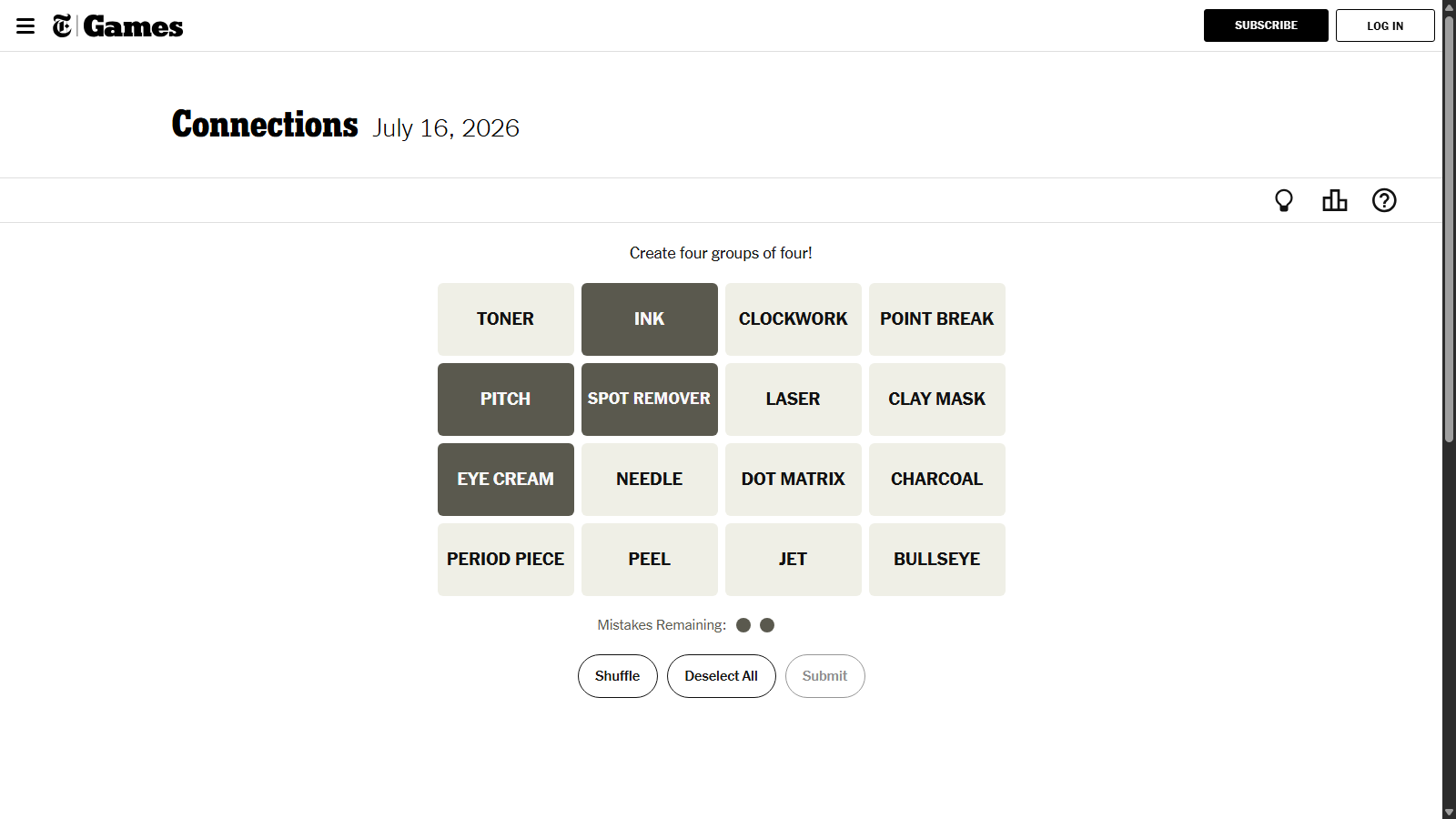
In Connections, you are presented with a set of 16 words. You must group each set of 4 words that have something in common. Most sets will have some words that belong to more than one group.
Due to this, the game is focused on critical thinking as well as on precise wording. The most common error is to submit the first of the easily perceptible groups. Before a group is submitted, inspect it to verify that none of the words in that group have more than one of the others in the group and that one of the words has a stronger relation among the rest of the words.
A good idea is starting from smaller categories first. Ones like ‘things painted in red’ are prone to making bad categories because too many items may end up satisfying that description. Instead, you may find a good grouping with a shared initial, a precise phrase, a reference from popular culture, or an example that is a good reference. For sure, the rest of the words can be used to check your grouping.
6. Chess.com Puzzles
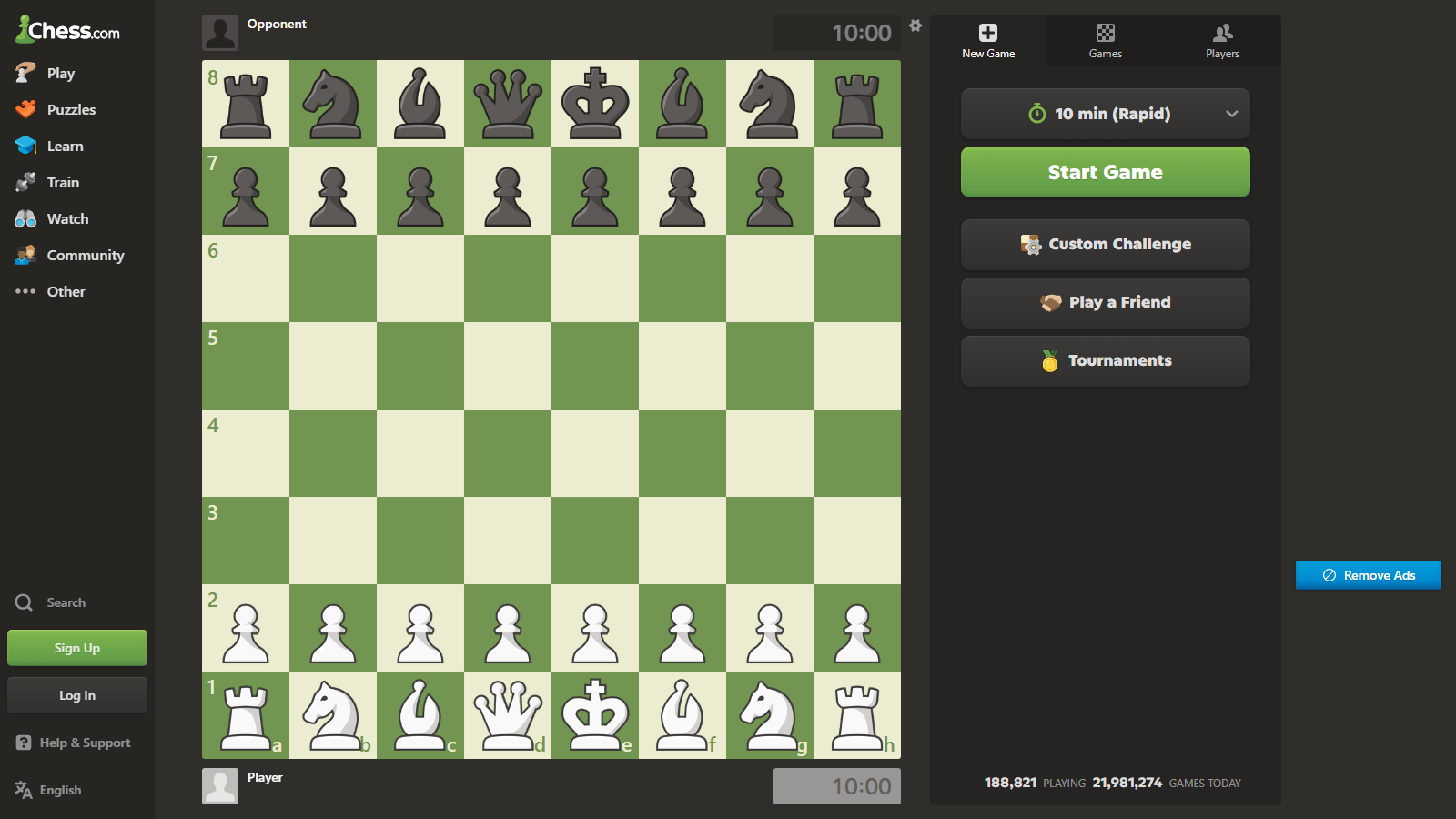
The tactical scenarios that Chess.com offers help players determine an optimal move or series of moves. Its puzzle area has rated training, daily positions, custom practice, Puzzle Rush, and Puzzle Battle. The platform claims players engage in these exercises to recognize and reinforce tactical patterns and enhance their calculation skills.
One must not get lured into playing the first good looking move. Start looking for the best move by first checking what your best moves are regarding checks, captures, and threats to the other player, but always check the move against the best possible response from your opponent. The move that wins your opponent material in capture against a passive play may end winning moves if the other player finds a forcing response.
Instead of just going quickly to the next move after making an error, go over the last move. Did you miss a pin or maybe a discovery attack that may be overloading the defender? Taking time to review your last guessed move will benefit your playing more than a thousand new guesses you make.
7. Tetris
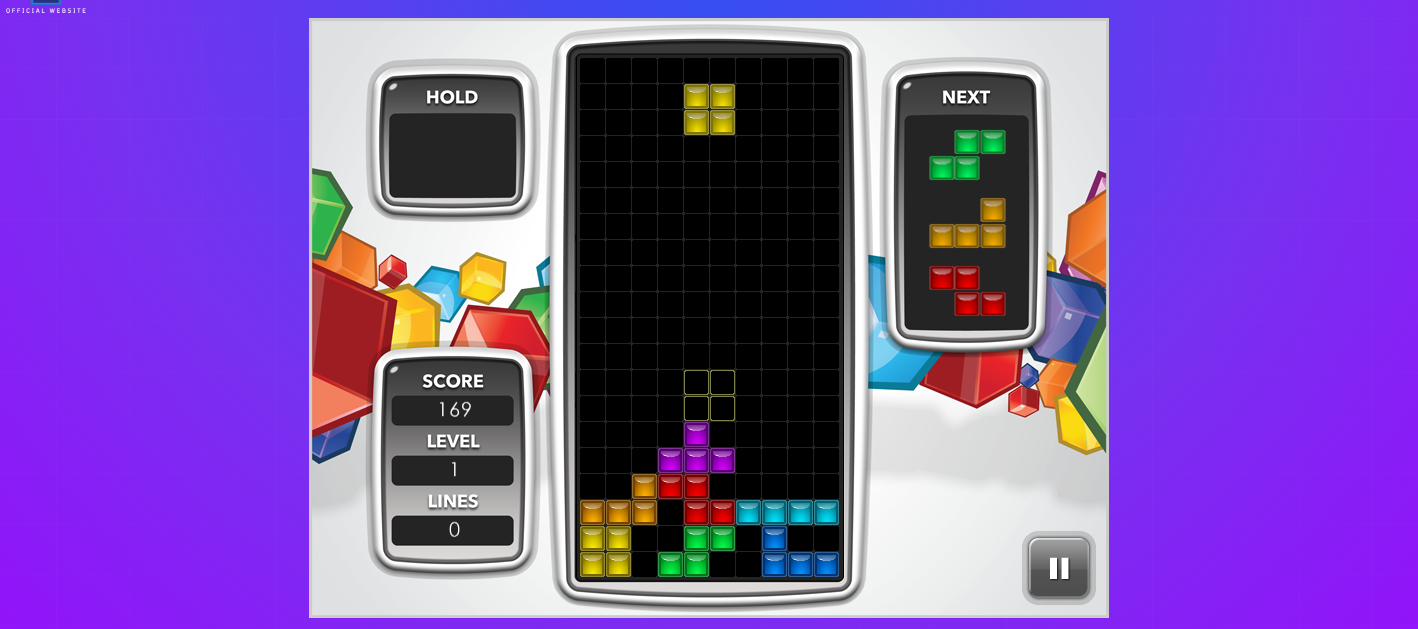
The objective of Tetris is to create complete horizontal rows by manipulating falling pieces. The official site hosts the browser version.
Contrary to popular belief, the game is much more than the simple controls. Strong players excel at planning and managing the risks. Each placed piece affects the board and gaps may remain the blocked for many turns.
Creating holes on the board is unavoidable, but players should aim to keep holes as shallow as possible. Players should also think beyond the piece on the board and instead concentrate on the next incoming piece. Many players tend to forget the balanced board and focus on making the board unstable to clear multiple rows at once.
8. GeoGuessr
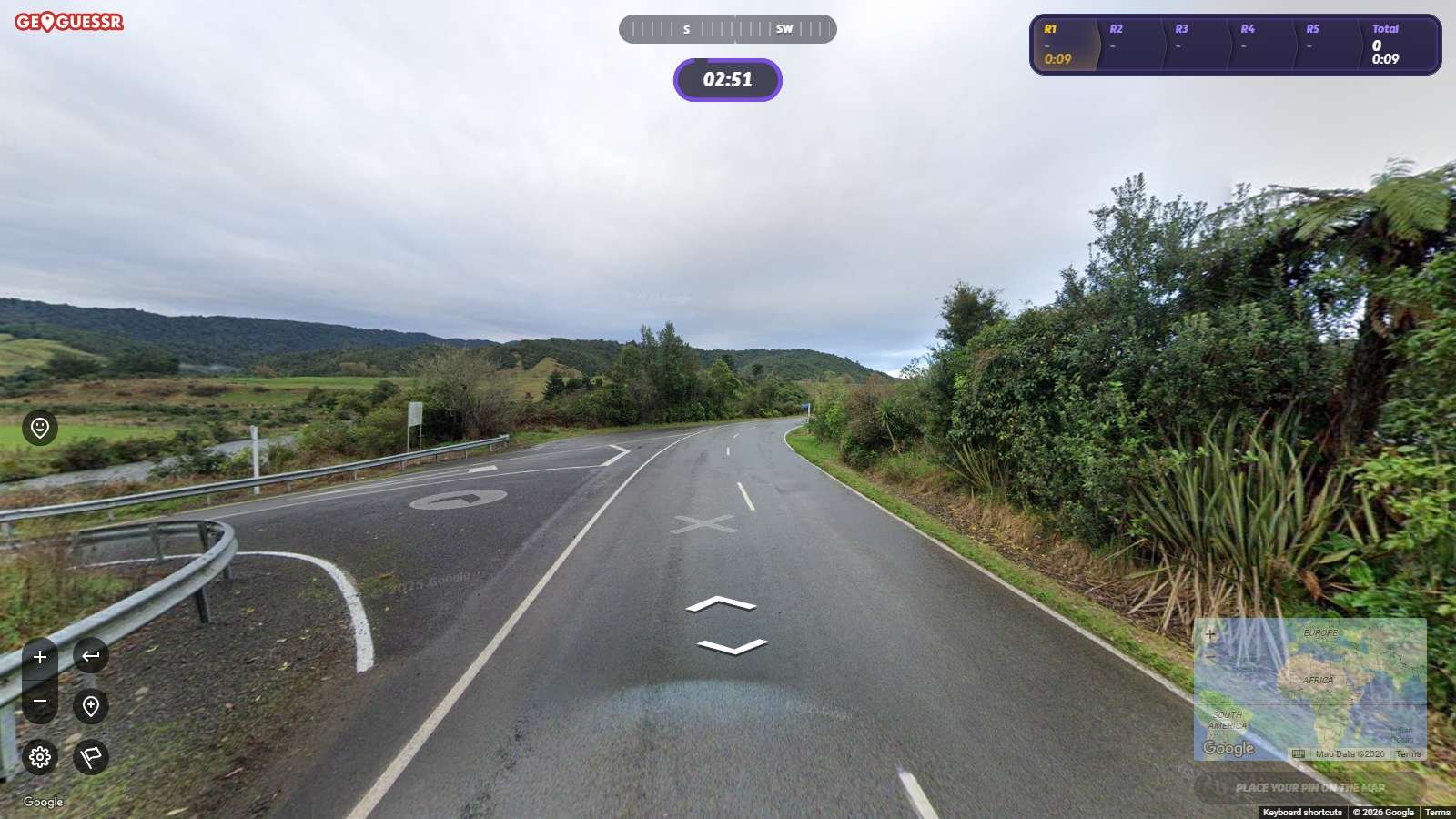
In GeoGuessr players must pinpoint the location of an image in street view by studying the surrounding area. Players must take note of the many clues that include architecture, driving direction, the terrain and even the vegetation.
The game helps players learn the difference between evidence and intuition. Saying, “this looks like it must be European” doesn’t cut it. It is better to explain why you think that, for example, using a national road sign or a labeled town.
When playing the game, first take note of the broader features like the climate, the terrain and the road side. Next, look for kind of clues that shape the region or country and note the smaller details. Avoid taking large leaps, as good reasoning will support multiple disconnected clues.
9. Sudoku
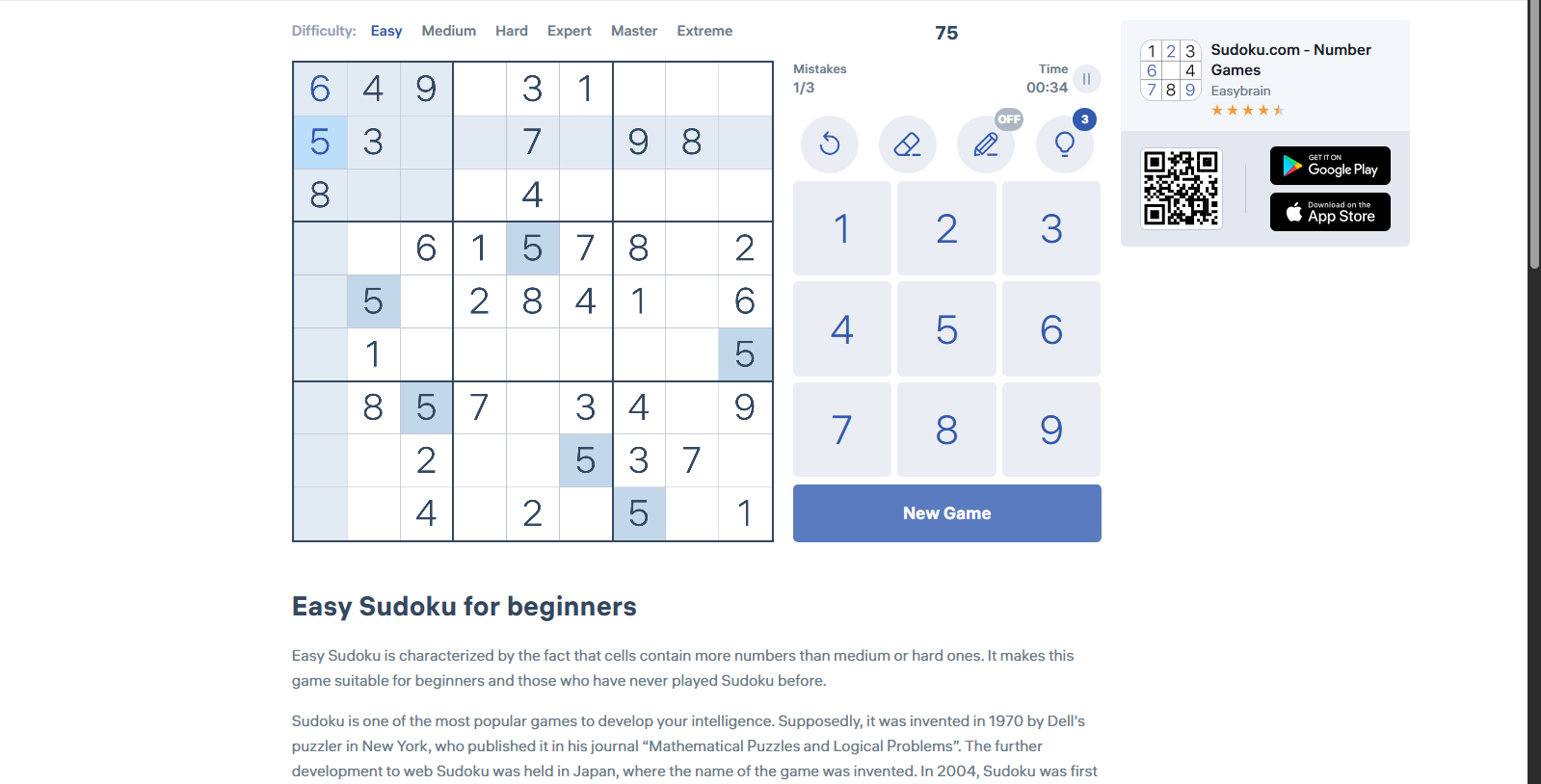
In Sudoku, players fill a 9x9 grid with the integers 1-9, ensuring that each value appears only once in each column, row, and associated 3x3 grid. The site provides classic and killer Sudoku with varying difficulty levels.
Although they are numbers, Sudoku is not a math game. Players have to use the numbers as symbols to fill in the grid according to the constraints. Players with less experience should look at the rows, columns, and grids with the least amount of boxes to see where the numbers will fit and determine which number should go in which box.
In the harder grids, players fill in as many notes as they can for the possible values of each box. Look for singles, pairs, and placements that remove candidates. Avoid making guesses. Solving Sudoku is an exercise in logic and one wrong answer can ruin everything. Your best bet is to look at the boxes with the least number of candidates.
10. Sporcle
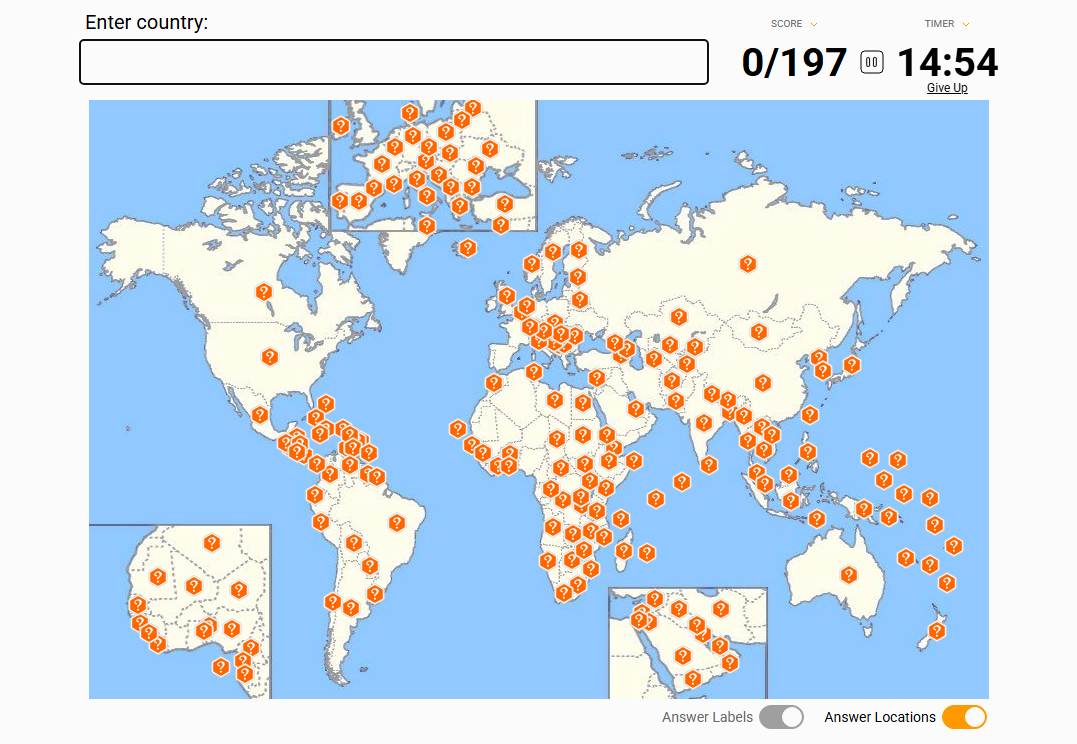
Sporcle is a trivia game site with user made quizzes on virtually every subject. It boasts many formats of quizzes including classic, type-in answers, grids, maps, clickable questions, true or false, multiple choice, ordering, and even picture quizzes and slideshows.
Players who prefer recalling knowledge as opposed to multi-step, abstract logic will prefer this site more. Pick categories that interest you the most, but be sure to not stay within your known subjects. Familiarity with a quiz tends to increase speed. Straying from familiar quizzes decreases speed, but increases knowledge.
Take time to review answers you missed. Not doing this is an impulsive, score-chasing mindset and is not a way to learn. It is better to note the answers you missed and return to that later, and then take a similar quiz to see how much knowledge you have retained.
Choosing Online Games Mind Games for Your Goals
There’s no single “best” choice. You should choose one you think you would enjoy or one that has the skills you want to practice.
Word games and word association games would include Scramble Race and Connections. If you are looking for number logic games, then you would choose Guess the Number and Sudoku. Simon works on short memory recall for sequences and Schulte Table works for visual search. Different classification and spatial games would include Tetris and SET. GeoGuessr is a game based on observation and logical guessing. If you are looking for chess problems, then you would go for chess puzzles, otherwise, you would choose Sporcle.
Just because a game has a ‘brain training’ tag doesn’t make it a good choice. There’s a lot of marketing talk around that. You are better off with a game that has clear rules and measurable outcomes with decisions you can analyze. The game should also be fun. There is no use in making a game look good on paper if you don’t enjoy it.
How to Build a Balanced Puzzles and Mind Games Routine
Creating a good routine for training your brain doesn’t take that long. Actually, you only need about 15-20 minutes. For your routine, you should choose 2 or 3 games instead of sticking to your favorite and most comfortable game.
Here’s a simple routine:
- Scramble Race or Simon for 5 minutes.
- Do a Sudoku or a few chess puzzles.
- Pick a visual game: SET or Schulte Table.
- Look at a mistake you made.
- For the day, write down one measurement. This could be time, accuracy, streak, or rating.
Performance data prevents vague descriptions of progress. But don’t lose it over just one bad score. Fatigue and distraction, as well as how challenging the puzzle is, all play a role in the score. Look at the data and take the averages over many sessions.
Once the difficulty of a puzzle becomes easy and there are no more challenging elements, it is time to move up a level to a harder one. Games don’t have to be stressful to be engaging, and puzzles that you can solve without focused thought are no longer engaging.
Common Mistakes to Avoid
The first mistake is rushing towards speed as a goal and clicking without a proper method. The clicks might score a point, but skill and accuracy are zero.
The second mistake is not moving on to the next puzzle without taking the time to review the last one. The most insightful learning moments can be after score a point and a review can be the insight not to make a poor scoring assumption again.
The third mistake is ignoring the practice of puzzles where you are not yet the greatest. Sticking to one of the familiar and easy puzzles is ok, but one engaging puzzle should also be there to strengthen a skill.
The last mistake is not controlling how long the browser puzzle that has turned into an hour of avoidance. Go and do that puzzle, but set a time limit for it and do an engaging puzzle with no time limit after.
Final Thoughts
Mind games are more engaging than traditional games. The best online games are thinking games. They teach you to compare and analyze different pieces of evidence, make sense out of a limited amount of information, recognize patterns, remember things in order, and even plan out different moves several turns in advance.
On PoXnT, try Scramble Race, Guess the Number, Simon, or the Schulte Table. Each of these games offers a unique challenge. Connections, Chess.com Puzzles, Tetris, GeoGuessr, Sudoku, Sporcle, and SET introduce language, strategic thinking, geography, numerical logic, trivia, and thinking in three dimensions.
The best way to think about mind games and puzzles is to use them as a way to replace some of your time spent on superficial activities with things that are at least somewhat constructive. Choose the games that you like, set challenges that actually mean something, and most importantly, learn something from your failures. The best thing you can do is play for 10 minutes with the most focused and clear intention you can possibly have instead of wasting time on your phone.